
IIITB

Clear DGCA Exams in First Attempt with India’s #1 Pilot Training Organization

  • Complete DGCA Syllabus: Air Regulations, Aviation Meteorology, Navigation, Technical General, and more.
  • Learn from Airline Pilots with 15+ Years of Experience
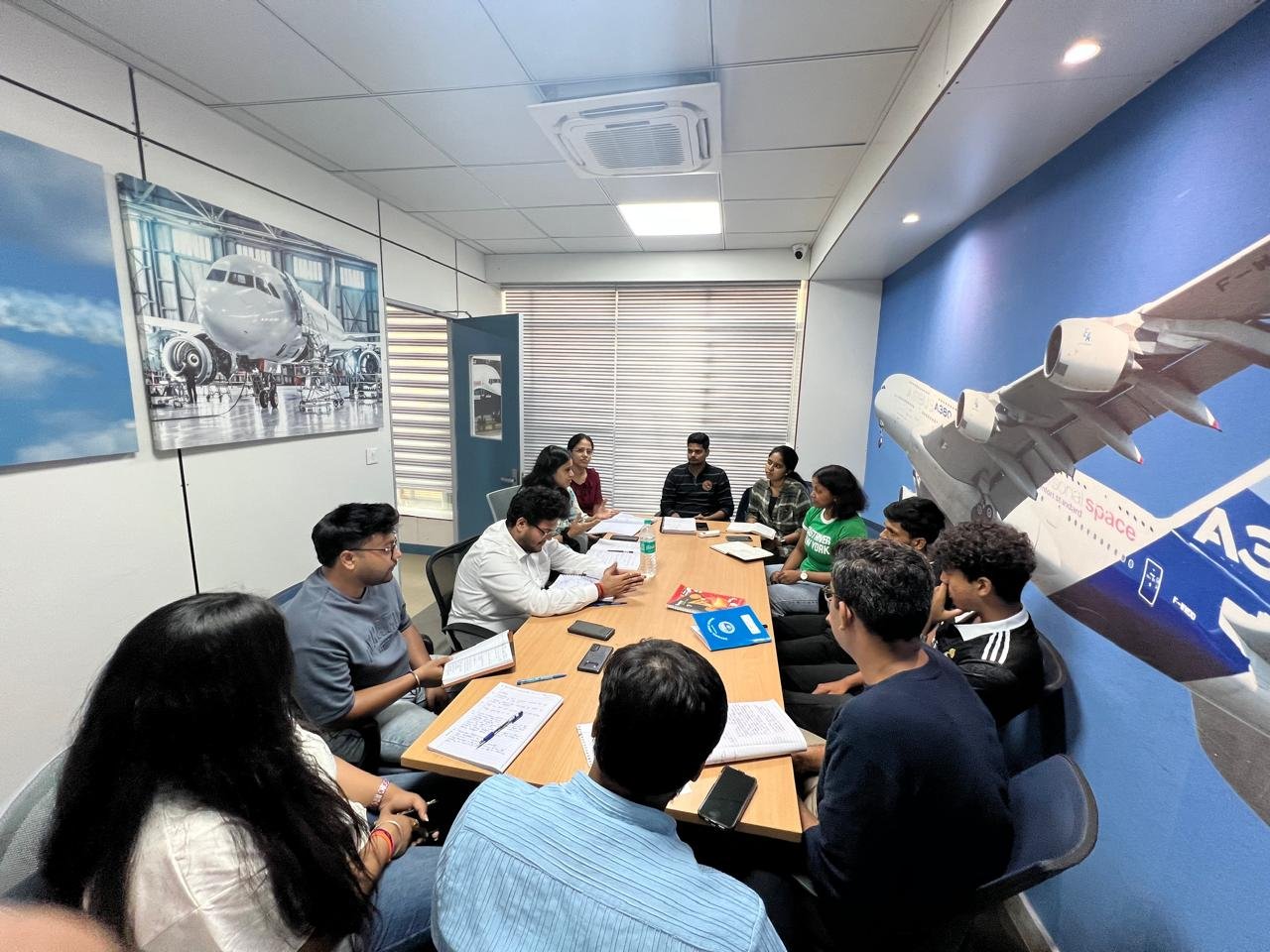
  • Interactive Learning: Live classes, recorded sessions, mock tests, and doubt-solving sessions
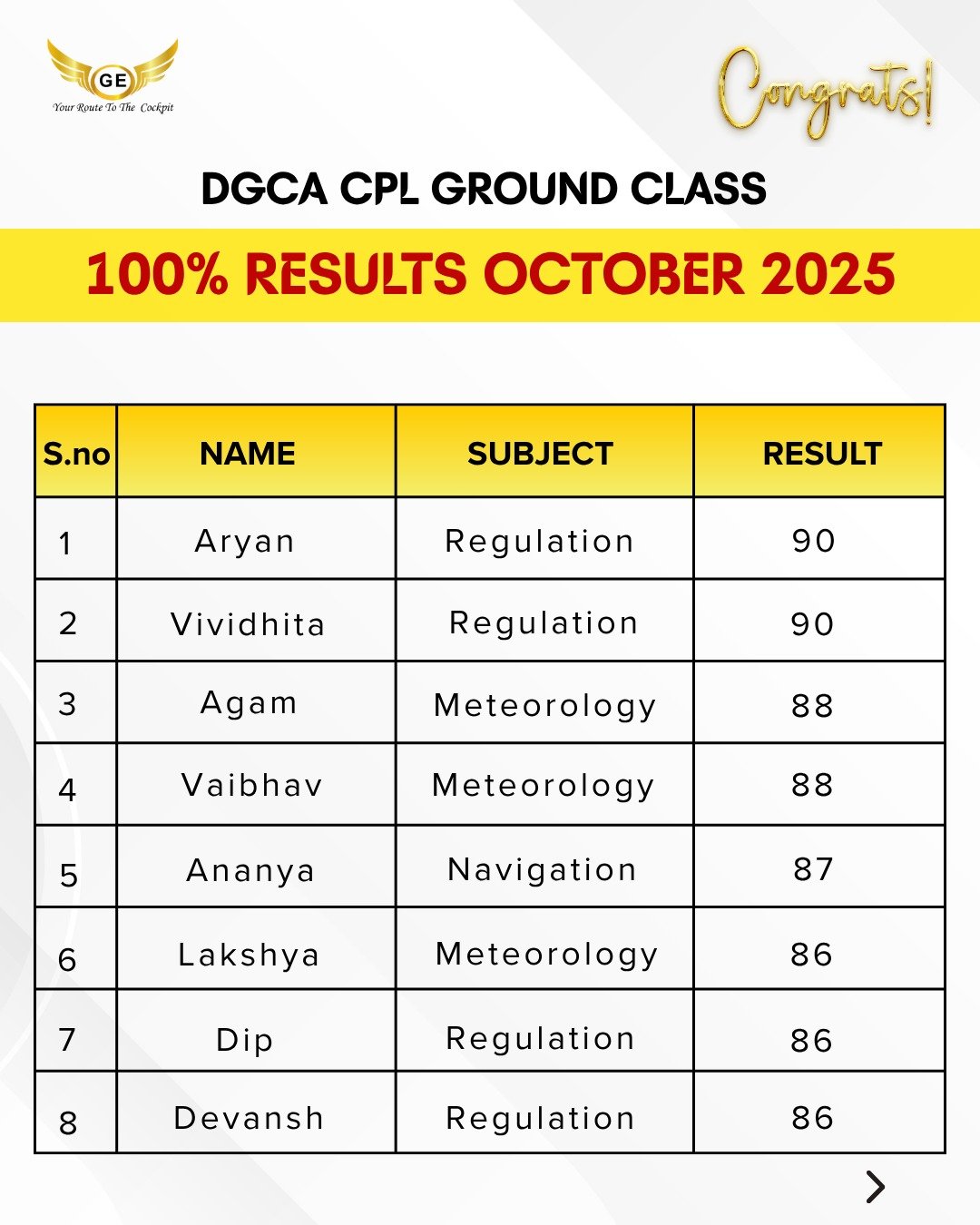
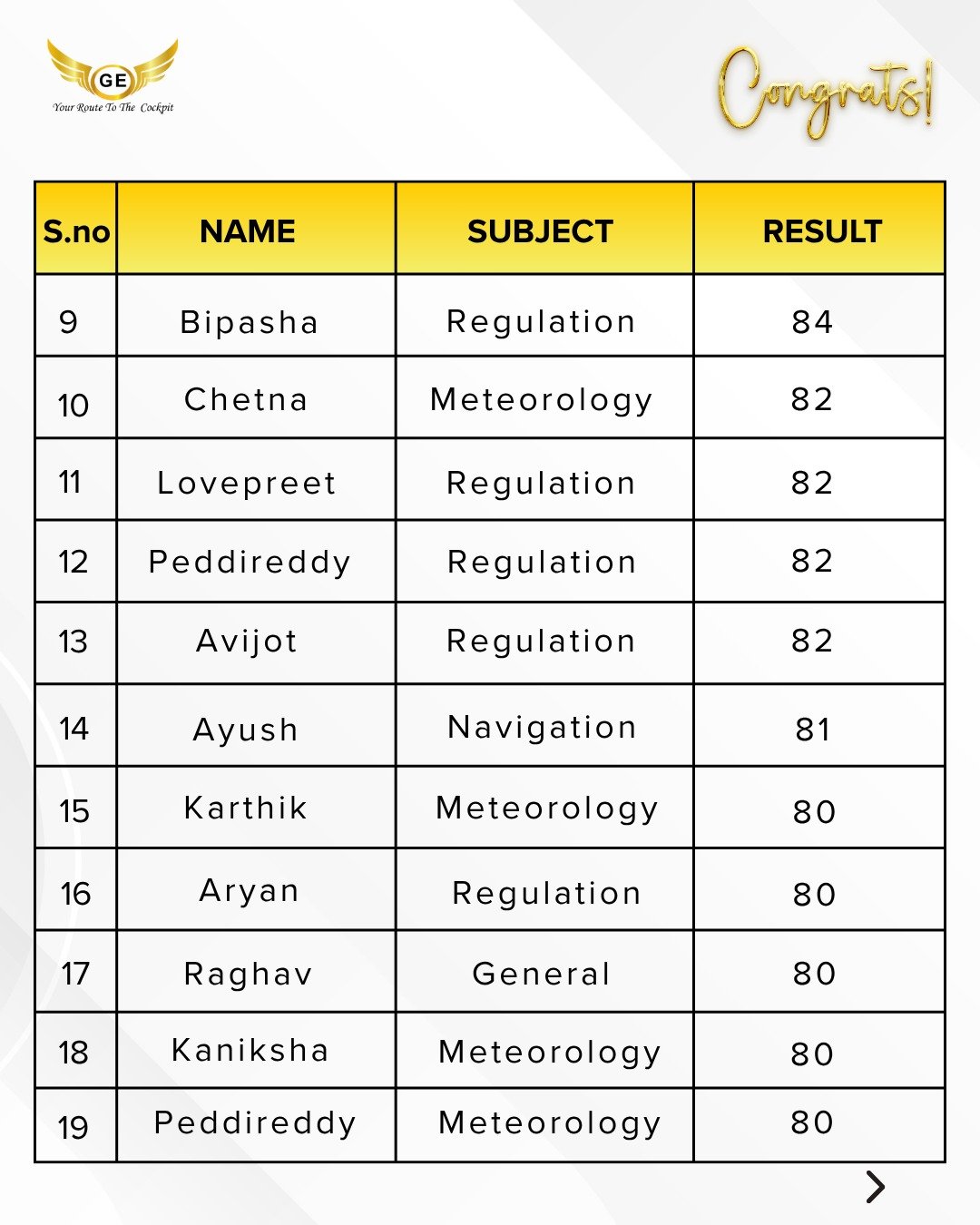
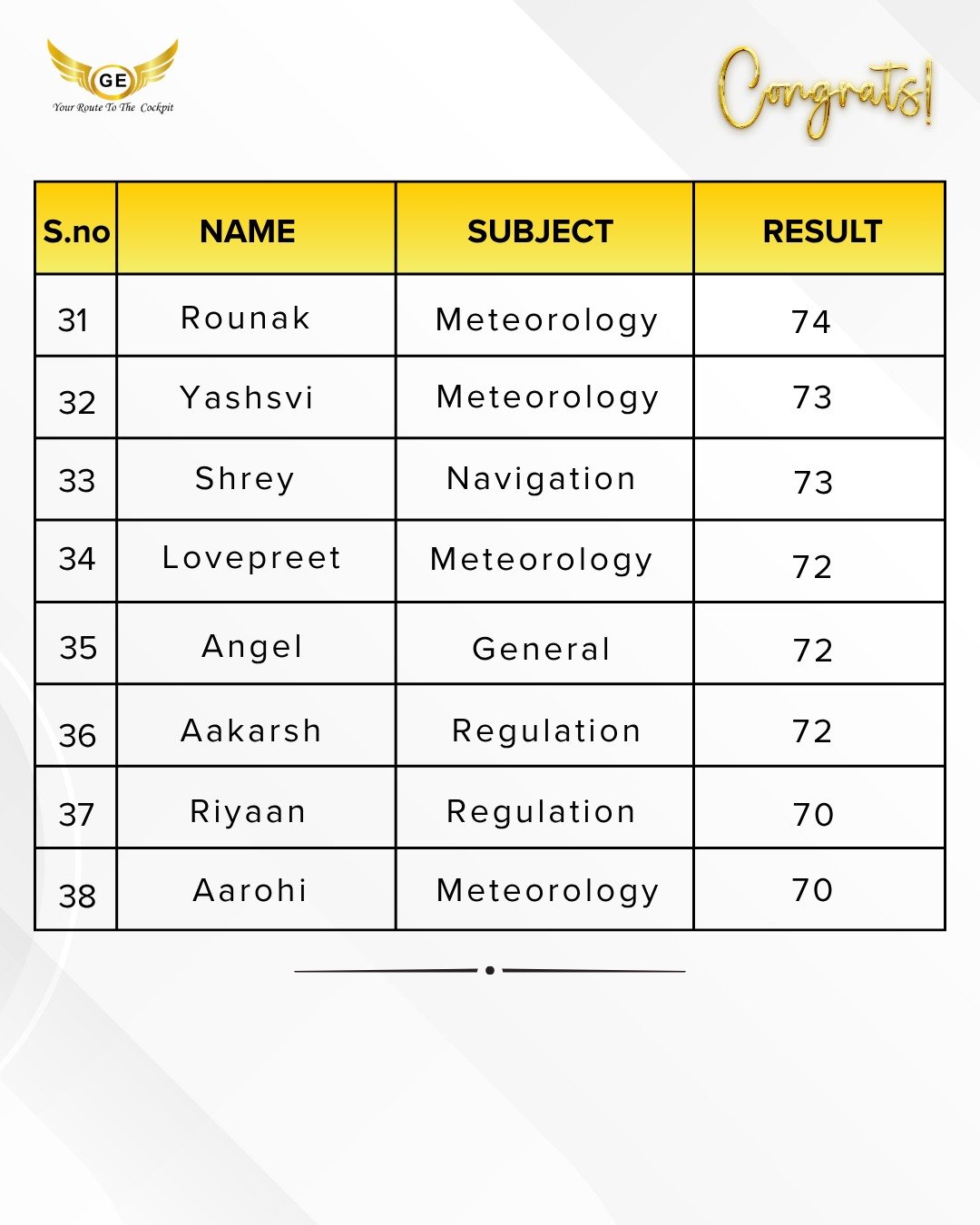
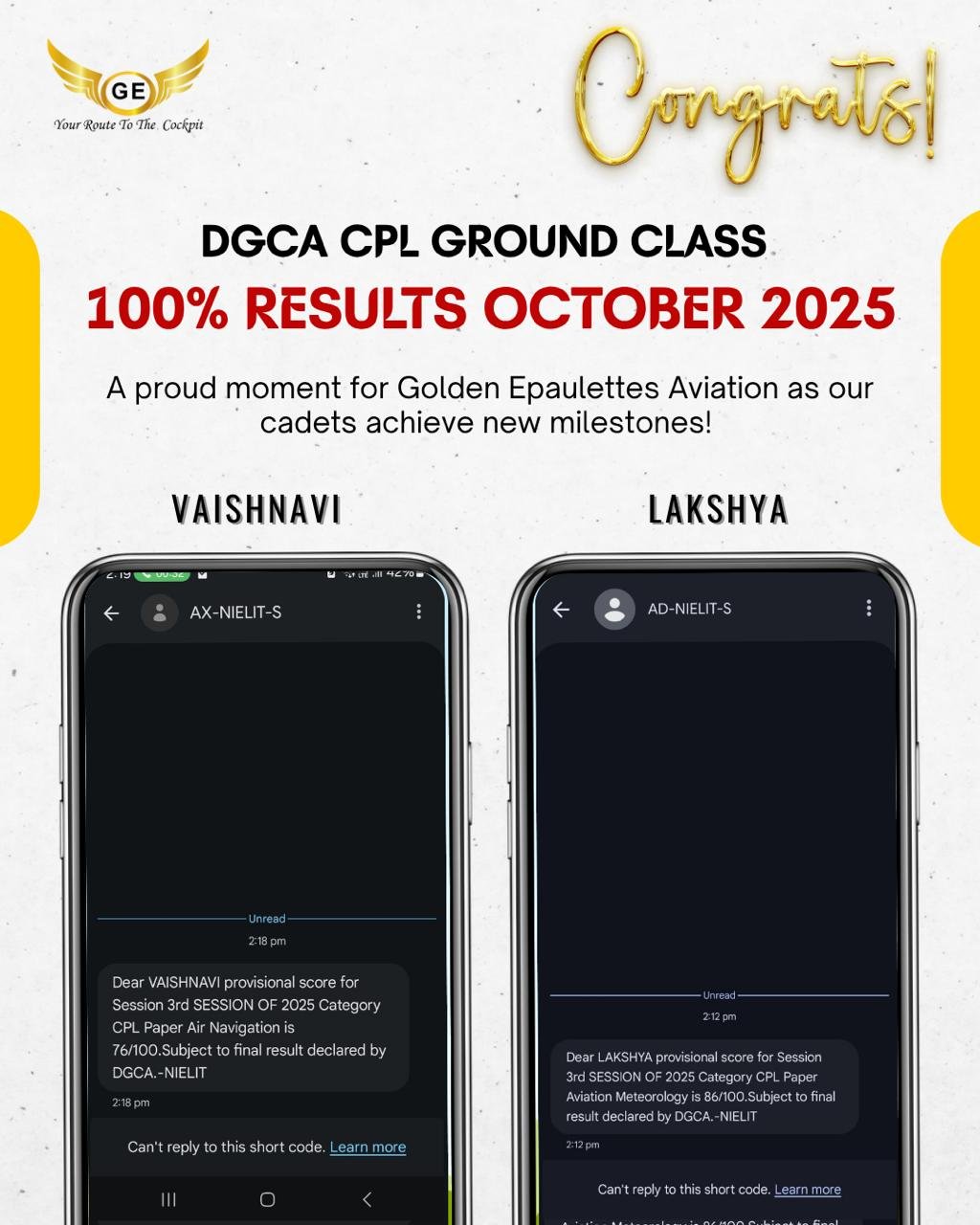
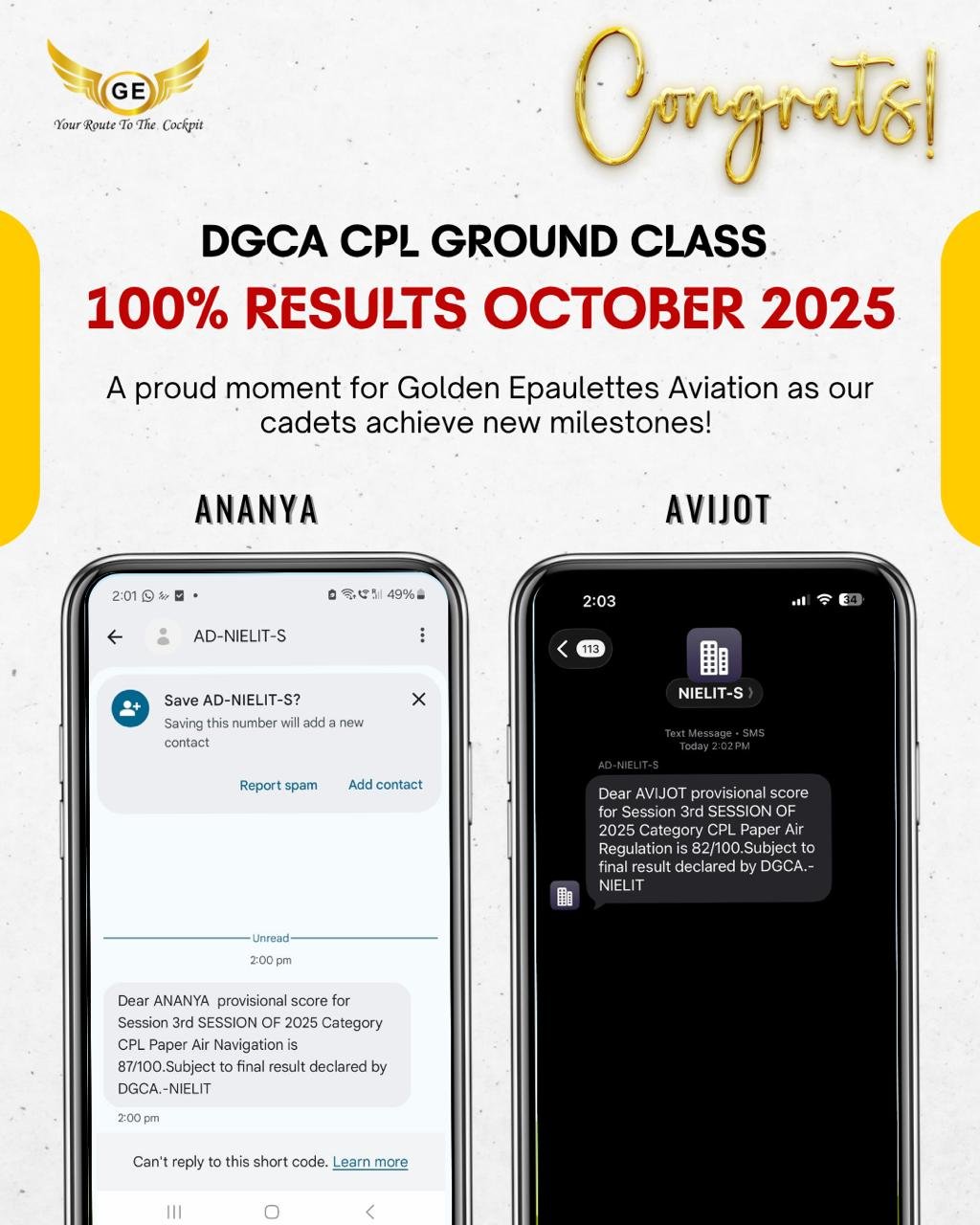
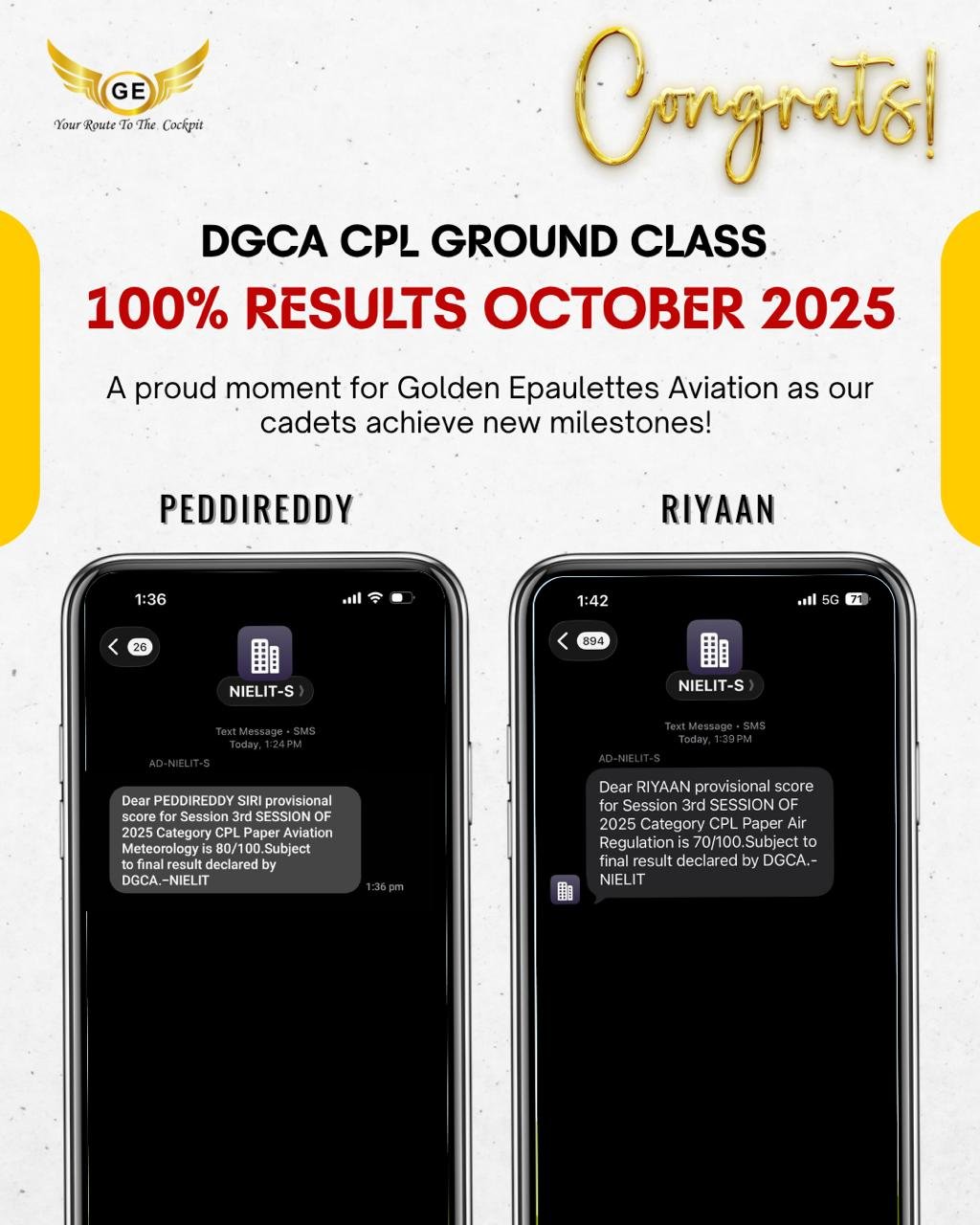
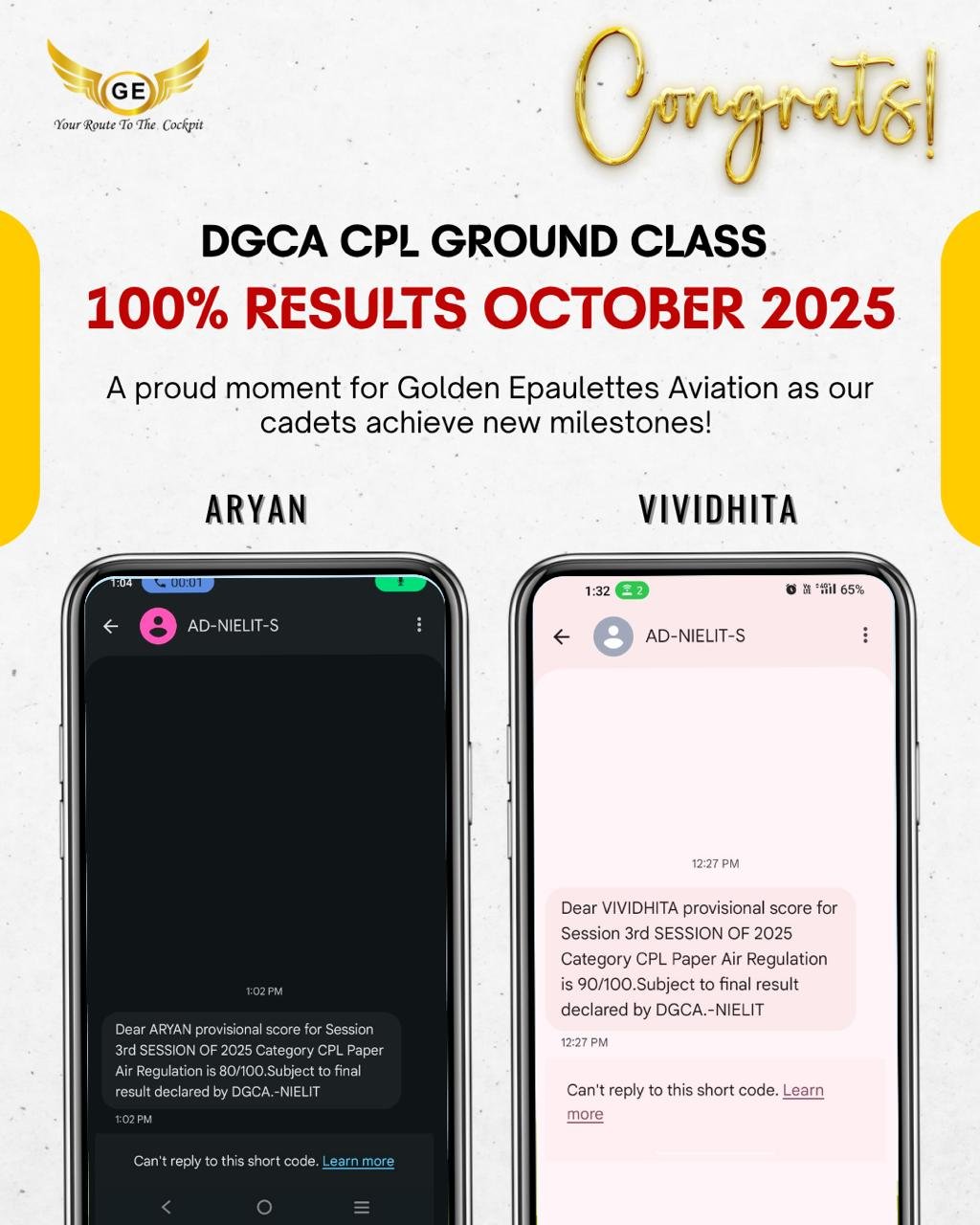
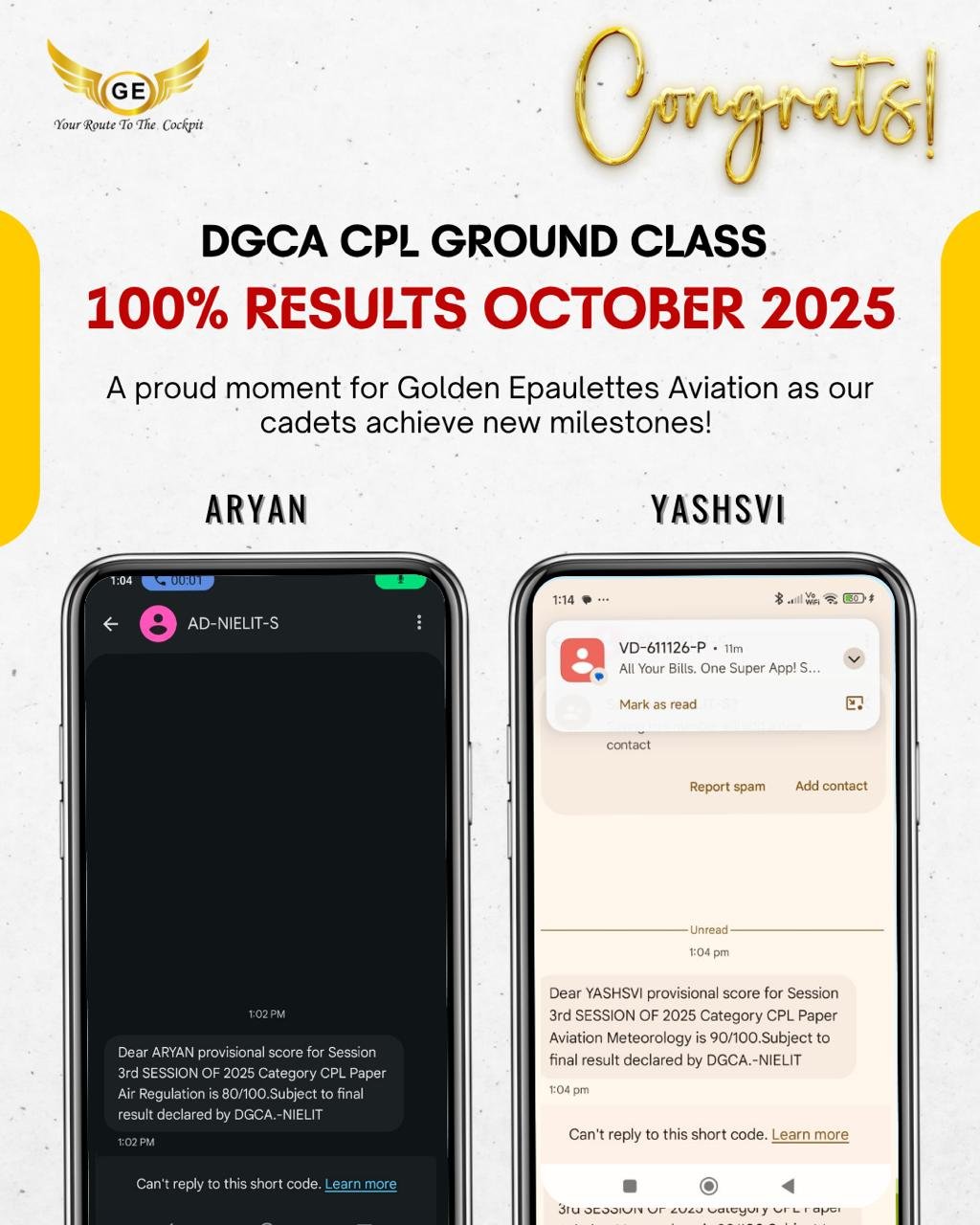
5400+ Successful Students | Alumni in Indian & International Airlines
Secure Your Spot!
  • Last Date: 2/5/2025
  • Batch Date: 2/5/2025
  • Batch Time: 14-Sep-2025

DGCA Ground Classes – Golden Epaulettes Aviation

Why Choose Golden Epaulettes Aviation?

icon
Personalised Learning

One-to-one mentoring with expert DGCA instructors. Flexible schedules for school/college students and working aspirants.

icon
Complete DGCA Syllabus Coverage

Air Navigation, Air Regulations, Meteorology, Technical General & RTR(A) – taught with real-world flying examples.

icon
30+ Practice Tests & Mock Exams

Stay exam-ready with regular DGCA pattern tests, doubt-clearing sessions, and progress tracking.

icon
Capstone Preparation

Bring your dream airline or pilot pathway goal – we’ll guide you with expert mentoring until you’re exam-ready.

icon
Top Faculty

Learn from India’s most trusted aviation instructors – airline pilots, CPL/ATPL experts with 15+ years of Experience.

Need to know more?

Get all the details you need about DGCA Ground Classes by Golden Epaulettes Aviation—syllabus, faculty, success stories, and career pathways.

Download brochure
Brochure Icon

Complete DGCA Course Curriculum

1. Air Navigation
DGCA rules & requirements

Covers all regulatory frameworks by DGCA that govern flight operations in India. Essential for pilots to ensure compliance and safety during their career

✔ International Civil Aviation Organization (ICAO) provisions
  • Explains ICAO global standards followed by all member states. Helps pilots operate with uniform international procedures.
✔ Air Traffic Services (ATS) procedures
  • Focus on communication, separation, and control between aircraft and ATC. Keeps skies organized, reducing collision risks.
✔Flight rules: VFR & IFR
  • Detail s on flying visually (VFR) vs instrument-based (IFR). Pilots must master both depending on weather and airspace..
✔ Licensing requirements & privileges
  • Outlines what licenses allow — PPL, CPL, ATPL rights and limitations. Clarifies legal boundaries of a pilot’s authority.
✔ Aircraft documents & certificates
  • Covers mandatory documents every aircraft must carry. Ensures legality and airworthiness during operations.
✔ Rules of the Air, ATC procedures, signals, and markings
  • Learn standard rules, light signals, and runway markings. Critical for safe communication and navigation on ground and in air.
2. METEOROLOGY
Duration: 4 weeks • ⭐ 4.7 (1850+ ratings)

Learn ICAO & DGCA rules, licensing, airspace structures, and operational procedures.

✔ Atmosphere structure & composition
  • Understand layers of the atmosphere and their effects on flying. Helps predict weather conditions at different altitudes
✔ Pressure, temperature, and density variations
  • Explains how these affect lift, engine performance, and flight planning. Foundation of performance and weather analysis.
✔ Clouds & precipitation types
  • Study formation, types, and effects of clouds and rain on aviation. Key for anticipating turbulence and visibility issues. .
✔ Winds: local, gradient, jet streams
  • Covers small-scale winds to global jet streams. Vital for fuel efficiency and route planning. .
✔ Visibility, fog, thunderstorms & turbulence
  • Learn how these hazards form and their dangers. Guides pilots on avoidance and safe decision making. .
✔ Weather systems (fronts, cyclones,anticyclones)
  • Explains large-scale weather phenomena and their movement. Critical for cross-country and long-haul planning.. .
✔ Interpretation of METAR, TAF, ATIS, and weather charts
  • Decode real-world weather reports used in aviation Practical skill needed before every single flight .
✔ Aviation weather reports & flight planning impact
  • Understand how weather info shapes flight routing. Builds foresight in operational safety. .
3. AIR NAVIGATION
Duration: 5 weeks • ⭐ 4.8 (2200+ ratings)

Understand weather systems, aviation climatology, and forecasting – essential for safe flying.

✔ Basic principles of navigation
  • Covers direction, position, and distance basics. The core of finding your way in the sky.
✔ Earth, time zones & great circle/small circle concepts
  • Learn geography and time-keeping critical for planning. Great circle routes save time and fuel in real ops.
✔ Instruments: compass, gyro, inertial systems
  • Detailed study of traditional and modern navigation tools. Helps pilots handle both old and advanced cockpits..
✔ Radio Navigation Aids: VOR, DME,NDB, ILS
  • Essential beacons for precise navigation and landings. Foundation for IFR flying.
✔ Dead reckoning & position fixing
  • Manual calculations using heading, time, and wind. Backup skill for electronic navigation failures.
✔ Flight planning & fuel calculations
  • Learn route planning with distance, time, and reserves. Ensures safety and efficiency.
✔ Use of navigation charts, plotting & track corrections
  • Practical chart reading and route plotting. Critical for real-time course correction.
✔ RNAV, GNSS, and modern navigation systems
  • Understand GPS-based systems used in modern jets. Enhances accuracy and situational awareness.
3. TECHNICAL GENERAL
Duration: 6 weeks • ⭐ 4.9 (2400+ ratings)

Aircraft systems, engines, instruments, electricals & performance explained for pilots..

✔ Basics of aerodynamics: lift, drag, thrust, weight
  • The four forces that keep an airplane flying. Foundation of performance and stability.
✔ Aircraft structures & systems(hydraulic, electrical, pneumatic)
  • Learn design and working of aircraft systems. Helps troubleshoot and understand limitations
✔ Propellers & jet propulsion
  • How thrust is generated differently across systems. Supports efficiency and performance studies
✔ Powerplants: piston engines, turbine engines (jet, turboprop, turbofan)
  • Study engine types used in small aircraft to airliners. Essential for type-rating readiness.
✔ Fuel systems, lubrication systems
  • Understand delivery of fuel and oil to engines. Keeps the heart of aircraft running smoothly.
✔ Flight instruments & avionics
  • Study cockpit displays and communication systems. Bridges human decision-making with technology.
✔ Aircraft performance & limitations
  • Know speed, weight, and altitude restrictions. Teaches safe operating envelopes
✔ Maintenance practices & troubleshooting basics
  • Basics of inspections and fault isolation. Promotes airworthiness and safety culture
3. HUMAN PERFORMANCE & LIMITATIONS
Duration: 4 weeks • ⭐ 4.7 (1900+ ratings)

Prepare for RT oral & written exams with live practice sessions and ATC-style communication drills.

✔ Basic human physiology for pilots
  • How the body adapts at altitude. Ensures safe handling of hypoxia and fatigue.
✔ Vision, hearing & sensory limitations
  • How the body adapts at altitude. Ensures safe handling of hypoxia and fatigue.
✔ Effects of altitude, hypoxia & fatigue
  • Learn how high-altitude flying affects health. Focus on oxygen use and rest management.
✔ Stress, workload & decision-making in cockpit
  • How stress impacts pilot judgment and CRM. Develops skills for calm, logical actions..
✔ Crew Resource Management (CRM)
  • Team coordination and communication. Essential for safe multi-crew operations.
✔ Situational awareness & human error management
  • Staying alert to aircraft, environment, and risks. Reduces chances of accidents.

What Our Learners Say

Amit Kumar
Amit Kumar

YouTube: Tech Innovator

“The hands-on projects made learning engaging and practical.”

Rahul Patel
Rahul Patel

YouTube: AI Visionary

“This course exceeded my expectations in every way.”

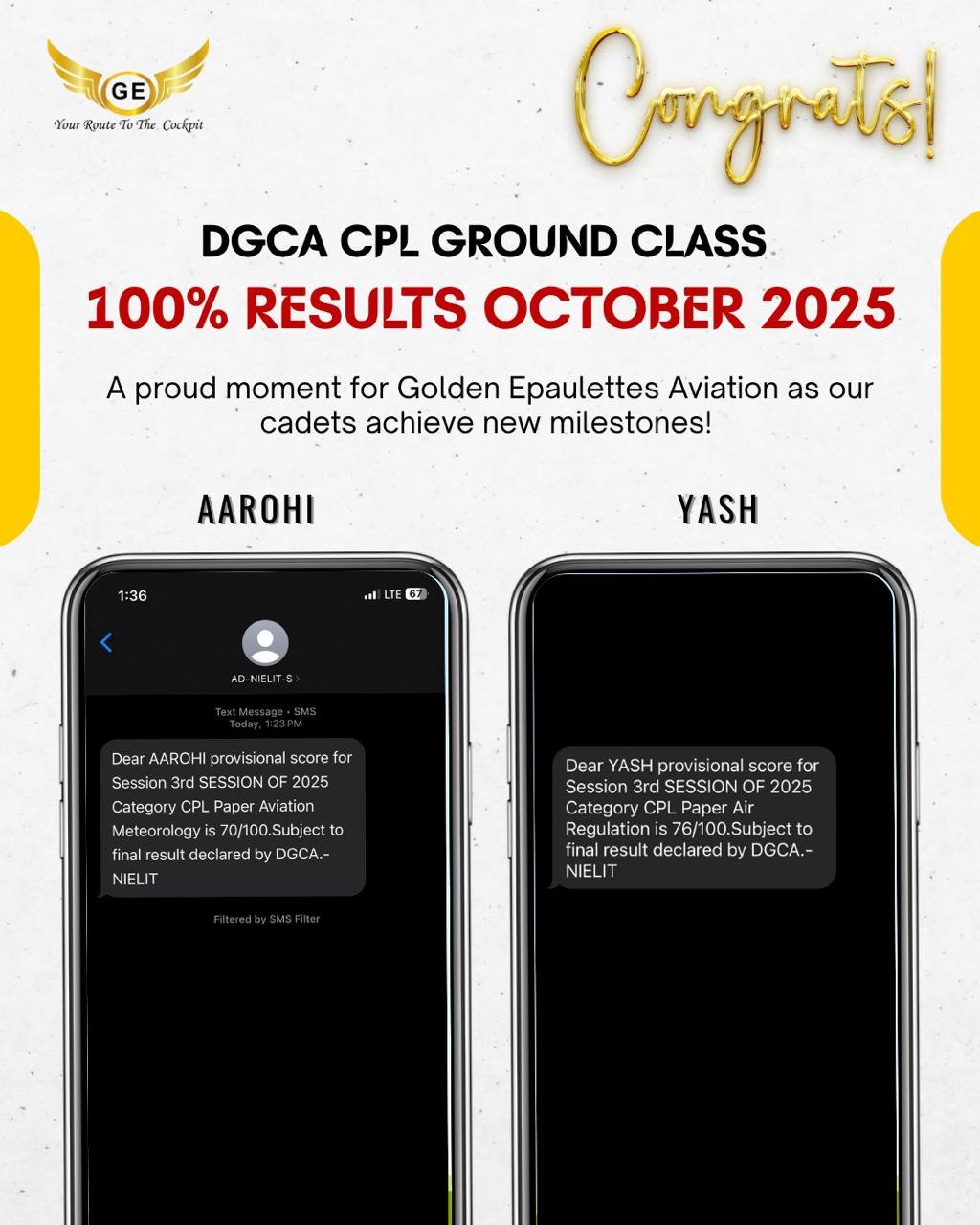
Real Results. Real Pilots. Real Success.

Tool 1
Tool 2
Tool 3
Tool 4
Tool 4
Tool 4
Tool 4
Tool 4
Tool 4
Tool 4
Tool 4
Tool 4
Tool 4
Tool 4
Tool 4
Tool 4
Tool 4
Tool 4
Tool 4
Tool 4
Tool 4
Tool 4
Tool 4
Tool 4
Tool 4
Tool 4
Tool 4
Tool 4
Tool 4
Tool 4
Tool 4
Tool 4

What sets Golden Epaulettes Aviation apart?

A premium experience designed to build successful pilots from the ground up.

Feature
Golden Epaulettes Aviation
Other Institutes
Depth of DGCA Curriculum
Full coverage of Navigation, Regulations, Meteorology, Technical General & RTR(A) with updated DGCA exam patterns.
Often partial or outdated syllabus; limited exam-focused preparation.
Beginner-Friendly Approach
Step-by-step teaching, doubt-clearing, revision support & flexible batches for school/college students.
One-size-fits-all classes, no structured beginner support.
Exam-Oriented Mock Tests
30+ DGCA-style practice tests, progress tracking & one-on-one feedback.
Few tests, not aligned with DGCA exam format.
Lifetime Assistance
Support throughout your journey – DGCA exams → Flight school admission → Airline selection → ATPL prep.
Support ends after course completion.
Faculty Quality
Instructors are airline pilots & DGCA-certified experts with 10+ years of experience.
Mixed faculty, often without real airline flying experience.
Career Building
Portfolio creation, cadet program prep, simulator interview training, and LinkedIn visibility.
No structured career support beyond classes.
Alumni Success
5300+ students cleared DGCA exams & are now flying with IndiGo, Air India, Emirates, and more.
Limited alumni reach, low visibility in airlines.

Who will you learn from?

Learn from the best in industry and academia

Capt. Deval Soni Pilot Mentor

Capt. Deval Soni

A320 Commander | Pilot Mentor | TedX Speaker

I've made it my mission to mentor future pilots. Get a clear, step-by-step roadmap to becoming a commercial pilot with real insights from my airline experience.
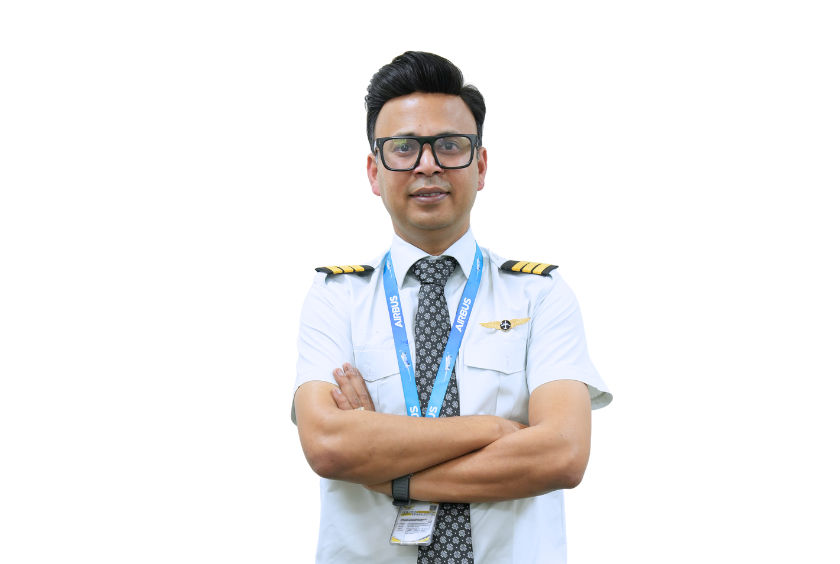
Capt. Awdhesh Tomar Pilot Mentor

Capt. Awdhesh Tomar

Aviation Educator | Author | Career Mentor

With 17+ years in aviation and DGCA coaching, I help aspiring pilots succeed through expert guidance, proven strategies, and personalized mentorship.
1
2
3
4
5
6
7
8
9
1
2
3
4
5
5
5
5
5
A
B
C
D
E
E
E
E
E
E
E
A
B
C
D
E

What Our Learners Say

Amit Kumar
Amit Kumar

YouTube: Tech Innovator

“The hands-on projects made learning engaging and practical.”

Amit Kumar
Amit Kumar

YouTube: Tech Innovator

“The hands-on projects made learning engaging and practical.”

Mohit Gupta
Mohit Gupta

YouTube: ML Insights

“Fantastic course with real-world projects that boosted my career.”

Priya Desai
Priya Desai

YouTube: CareerSpark

“Helped me switch to a career in AI with confidence!”

Neha Singh
Neha Singh

YouTube: Data Guru

“Incredible support from mentors throughout the journey.”

Rahul Patel
Rahul Patel

YouTube: AI Visionary

“This course exceeded my expectations in every way.”

Need guidance? Talk to our career expert!

Get in touch with our program advisor & get your queries resolved. Our experts are here to guide you every step of the way toward your pilot career.

Connect with us
Career Experts

Frequently Asked Questions

Get answers to common queries about our services.

How long has Golden Epaulettes Aviation been training pilots?

Golden Epaulettes Aviation was established in 2009 and has been providing quality pilot training for over 15 years, guiding students toward successful aviation careers.

Who are the instructors?

Our faculty includes experienced airline captains and certified instructors who have flown with leading airlines like IndiGo, Air India, and Vistara — ensuring you learn directly from professionals who’ve been there.

Do you provide accommodation for students?

While we don’t operate our own hostel, we have partnerships with safe and affordable PG accommodations located within walking distance from the academy in Dwarka, New Delhi.

Can I visit the academy before joining?

Absolutely! We encourage students and parents to visit our campus for a personal counselling session and academy tour to understand our training environment and teaching style.

What is the daily schedule for ground classes?

Classes typically run 5–6 hours per day, 5–6 days a week, starting at 8:00 AM IST. The schedule may vary based on batch size and subjects.

Can I enroll for individual subjects instead of a full package?

Yes, you can choose individual subject modules, though we recommend the complete package for better value and comprehensive preparation.

Are online classes available?

Yes! We conduct live online sessions via Zoom with whiteboard explanations, Q&A interaction, and digital study materials provided to all students.

What if I miss a class?

If you miss a class with prior approval, you’ll get recorded access to the session for revision purposes.

Are online students at a disadvantage compared to offline ones?

Not at all. Online and offline students receive the same materials, faculty access, and assessments, ensuring equal learning outcomes.

Do you assist with DGCA Computer Number and WPC RTR registration?

Yes. We provide complete guidance and documentation support for both DGCA Computer Number and WPC RTR(A) registration processes.

What is your DGCA exam pass rate?

Our students consistently achieve an 85%+ first-attempt pass rate across all DGCA subjects, thanks to regular mock tests and continuous mentoring.

Do you offer flying training as well?

Yes. We offer flying training in India, the USA, and Europe, through our network of verified Flying Training Organisations (FTOs).

Can you help choose the best flying school?

Absolutely! Based on your budget, timeline, and career goals, we recommend the most suitable and DGCA-approved FTOs.

Do you prepare students for airline cadet programs?

Yes, we specialize in Cadet Program Preparation for airlines like IndiGo, Air India, and Qatar Airways — covering written exams, psychometric tests, interviews, and simulator prep.

What are the career prospects after CPL?

With proper guidance, CPL holders can find excellent career opportunities in both domestic and international airlines. Our alumni currently fly with IndiGo, Air India, Vistara, and Qatar Airways.

I’m from a non-science background. Can I become a pilot?

To apply for a CPL, Physics and Math at Class 12 level are mandatory. You can complete them via NIOS or state boards, and we offer assistance with this process.

What medicals are required for pilot training?

You must complete DGCA Class 2 and Class 1 medicals through approved doctors. Our team will guide you through every step of the process.

What is the minimum age and qualification for CPL training?

You must be at least 17 years old and have passed 10+2 with Physics and Math.

Are scholarships or loans available?

We guide students in applying for education loans through banks and NBFCs against property or other financial instruments.